
Published August 30, 2026
The Kingston-born, Toronto-based singer-songwriter has developed an expansive musical identity through gospel, reggae, classical training, Afrobeat, R&B, and pop, bringing those influences together on the album “Music Is Life.”
Jay J. Ra’s music has developed across several locations, traditions, and stages of personal growth. Born Dadrien Brown in Kingston, Jamaica, and now based in Toronto, he has built an artistic identity around movement rather than limitation, allowing his voice to travel between Pop, R&B, Afrobeat, Classical (Opera), and Gospel without treating those forms as separate compartments.
That range is central to the artist’s current work, but it is not presented as a collection of disconnected experiments. Instead, the different influences appear to meet through a consistent interest in melody, vocal expression, reflection, and emotional clarity. For audiences searching for a genre bending music artist, Jay J. Ra offers a case study in how versatility can become a form of continuity when it is grounded in a recognizable voice.
His album, Music Is Life, brings that approach into focus. Released in 2026, the project carries the same phrase Jay J. Ra uses to describe his outlook, presenting music not simply as entertainment but as a central part of identity, memory, endurance, and connection.
A musical identity shaped by movement
Music entered Jay J. Ra’s life early. According to his official biography, he began singing in church at the age of eight, and by fourteen had committed himself to a career in music. At twelve, he sang the lead on Kirk Franklin’s “Silver and Gold” with a community children’s choir during a broadcast on Jamaica’s Roots FM. These early experiences established a relationship with performance that was both communal and disciplined.
His family background also gave him a direct connection to Jamaican musical history. His father was a reggae artist and producer who worked with figures including Dennis Brown, Gregory Isaacs, Errol Dunkley, and Sanchez. That lineage appears to have provided more than a stylistic influence. It placed music within a broader cultural context, where songwriting could carry personal meaning while remaining connected to community and tradition.
Jay J. Ra’s early songwriting developed alongside that vocal foundation. In 2007, he recorded his first demo, “Can You Feel,” beginning a recorded journey that would later include several independent releases under the name D.bé Jayri. The work from that period helped establish an ongoing interest in soulful songwriting and expressive interpretation.

The move to Toronto in 2009 added another dimension to that development. While studying music at York University, Jay J. Ra sang tenor with the York University Gospel Choir, performed classical repertoire with the Male Vocal Ensemble, and trained in opera and staged performance. Those disciplines have given his work a notable technical grounding, particularly in the control and projection required to move between intimate passages and more expansive vocal moments.
The result is not a simple fusion of styles. It is a vocal approach shaped by several musical environments at once.
The voice as the point of continuity
Genre-defying music can sometimes become difficult to place because the individual elements compete for attention. Jay J. Ra’s catalog appears to avoid that problem by placing the voice at its center. Whether a song leans toward pop structure, R&B phrasing, gospel warmth, Afrobeat rhythm, or classical technique, the vocal performance remains the clearest connecting element.
That instinct is important because the genres in Jay J. Ra’s musical vocabulary carry different expectations. Gospel often emphasizes spiritual intensity and collective feeling. R&B allows for intimacy, flexibility, and emotional detail. Afrobeat brings rhythmic momentum and an international perspective, while opera introduces formal control, projection, and dramatic scale. Pop, meanwhile, creates a direct structure through which those influences can reach a broad audience.
Jay J. Ra’s background allows him to work across those expectations without presenting genre as costume. The emphasis remains on interpretation. A song can change its rhythmic setting or vocal arrangement while retaining its emotional center.

That flexibility also reflects a wider artistic history. Before adopting the name Jay J. Ra, he released projects including Soul Glimpse, Glorious, Beautiful and Black, Happy Kwanzaa, A Soulful Christmas, and I Am. The progression suggests an artist who has continued to accumulate experience rather than discard earlier chapters.
In 2024, Jay J. Ra uncovered ancestral roots in Kwahu, Ghana, and entered a new personal and professional period, legally changing his last name to Amen-Ra and adopting the stage name Jay J. Ra. The change deepened his connection to African heritage and helped open the way for collaborations with Ghanaian artists, including African Child. In this context, Afrobeat is not an isolated stylistic choice. It forms part of a larger conversation about ancestry, identity, and the relationship between different parts of the African diaspora.
“Music Is Life” as a working philosophy
The title of Jay J. Ra’s album is direct. Music Is Life does not rely on a complicated metaphor to explain its purpose, and that plainspoken quality is consistent with the themes associated with his work. His songs frequently address endurance, relationships, self-definition, spirituality, and change, presenting those subjects with an earnestness that resists excessive distance or irony.
The phrase also summarizes the arc of his career. Music has been present in his life through church, family, education, live performance, independent releases, and cultural reconnection. It has functioned as a profession, a discipline, and a language for understanding experience.
That foundation gives the album a sense of continuity. The project does not appear to be a sudden reinvention, but rather a concentrated expression of ideas that Jay J. Ra has been developing over time. Earlier singles such as “Change,” “Time,” and “Don’t You Worry” have already established a flexible songwriting approach, and the album extends that direction through a larger body of work.
The title track, “Music Is Life,” serves as the project’s opening statement. Its placement suggests an intentional introduction to the album’s central outlook, while the remaining songs explore the more specific emotional and relational territory surrounding that belief.
An album built around reinterpretation
One of the clearest signs of Jay J. Ra’s cross-genre approach is the way Music Is Life includes alternate versions of existing material. “Sweet Stories 2 (Soulful Solo Version)” offers a solo reinterpretation of the song, while “One Day at a Time (Reggae Remix)” places another existing composition in a different rhythmic setting.
Those versions are more than additional tracks. They demonstrate how the same songwriting can carry different shades of meaning when its arrangement, pacing, or vocal framing changes. A soulful solo version can bring the singer and lyric into closer focus, while a reggae remix can reconnect the material to the Caribbean traditions that have influenced Jay J. Ra from childhood.
The album’s collaboration with African Child on “Sweet Stories 2” adds another layer to that conversation. The track links Jay J. Ra’s Jamaican and Toronto-based experience with a Ghanaian creative connection, reinforcing the international perspective that has become increasingly visible in his work.
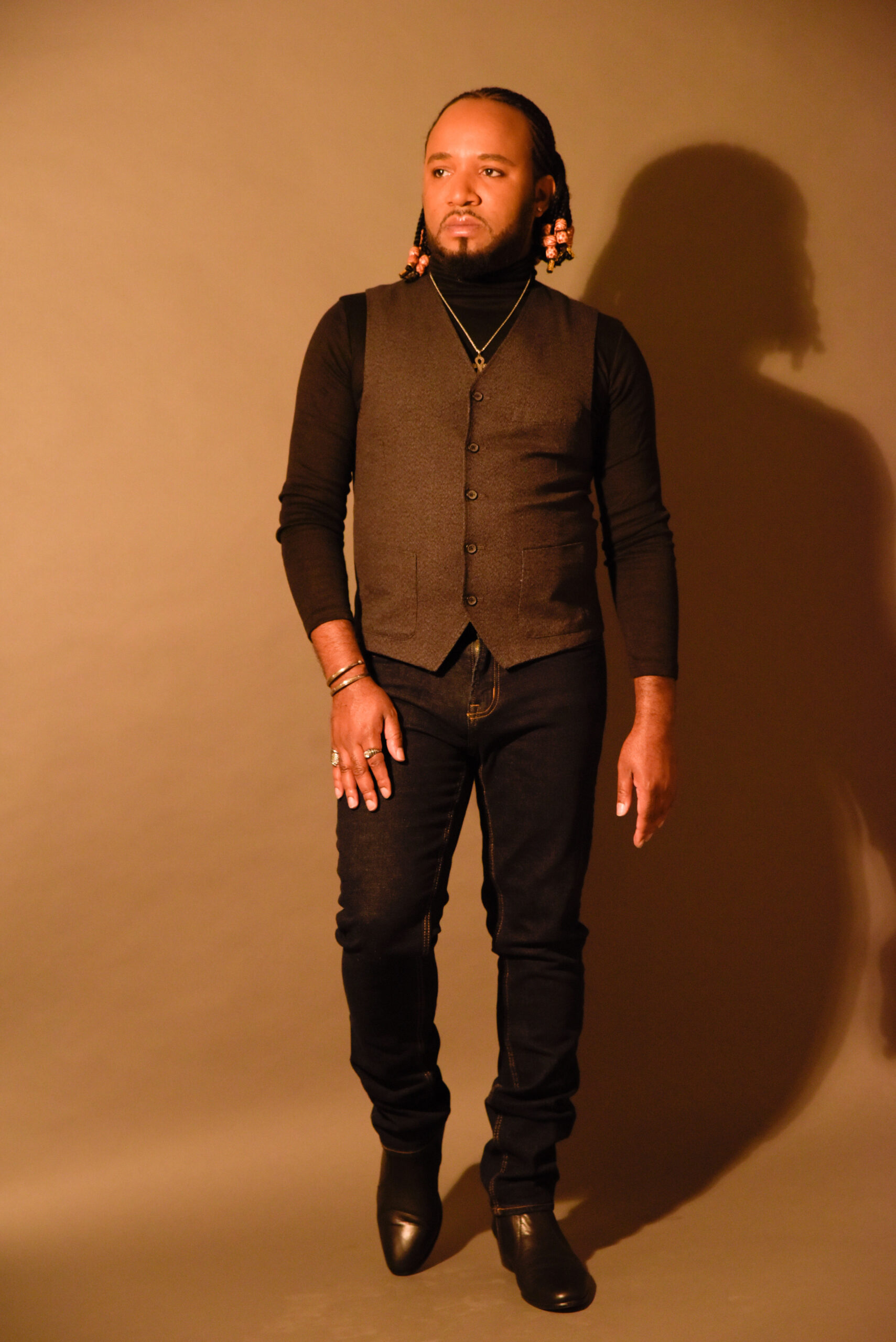
The ten-track sequence moves between statements of purpose, reflective songs, relationship-focused material, and reinterpretations:
- “Music Is Life” : 3:31
- “Time” : 3:44
- “Don’t Give a Damn, Authentically” : 3:44
- “Sweet Stories 2” featuring African Child : 4:31
- “One Day at a Time” : 6:22
- “Don’t You Worry” : 4:55
- “Change” : 5:12
- “Sweet Stories 2 (Soulful Solo Version)” : 3:25
- “Give Me One Last Chance 2” : 4:14
- “One Day at a Time (Reggae Remix)” : 4:51
Several of the album’s most prominent tracks, including “Don’t Give a Damn, Authentically,” “Music Is Life,” “Give Me One Last Chance 2,” “Change,” and “Sweet Stories 2,” reflect the balance between personal expression and accessible songwriting that defines the project’s positioning.
A continuing artistic arc
Jay J. Ra’s development is best understood as gradual refinement. His early church experiences, reggae inheritance, formal studies, opera training, independent catalog, and reconnection with Ghanaian ancestry have each contributed to the artist he is presenting now.
At the same time, his work stands apart from the pressure to constantly choose a single marketable identity. Contemporary music often encourages immediate categorization, but Jay J. Ra’s catalog suggests that a stable artistic identity can also emerge through range. The voice, subject matter, and commitment to emotionally direct songwriting provide grounding even when the arrangements move across different traditions.
Music Is Life therefore functions as both an album and a marker within a larger journey. It gathers the influences that have shaped Jay J. Ra while leaving room for further development. Its central idea remains simple, but the path behind it is layered: Jamaica and Toronto, gospel and opera, reggae and Afrobeat, personal history and international reach.
For Jay J. Ra, music continues to be a source of discipline, connection, and purpose. The album reflects that continuity with a clear and measured confidence, offering another chapter in an evolving body of work rather than a final definition.
Album details
- Artist: Jay J. Ra
- Album: Music Is Life
- Release year: 2026
- Format: 10-track album
- Featured artist: African Child on “Sweet Stories 2”
- Musical influences: Pop, R&B, Afrobeat, Classical (Opera), Gospel, and reggae
- Official album page: Jay J. Ra presents “Music Is Life”
- Listen on Spotify: Music Is Life by Jay J. Ra
- Listen on Bandcamp: “Music Is Life” on Bandcamp
- Artist background: About Jay J. Ra